


Xiangya Hospital of Central South University, founded in 1906, is located in Changsha, a historically and culturally rich city known as the "ancient capital of Chu and Han." It is one of the earliest Western-style hospitals in China, and is a Class A tertiary comprehensive hospital directly under the National Health Commission, as well as an affiliated hospital of Central South University, which is under the Ministry of Education. Since its inception, the hospital has aligned itself with top-tier European and American medical standards. Over more than a century of dedicated development, guided by generations of Xiangya professionals, it has become a highly influential center for clinical diagnosis and treatment, medical education, and scientific and technological innovation in China. Adhering to a philosophy of high standards and refined management, the hospital imposes extremely stringent professional requirements on its in-patient environment and supporting hardware infrastructure.
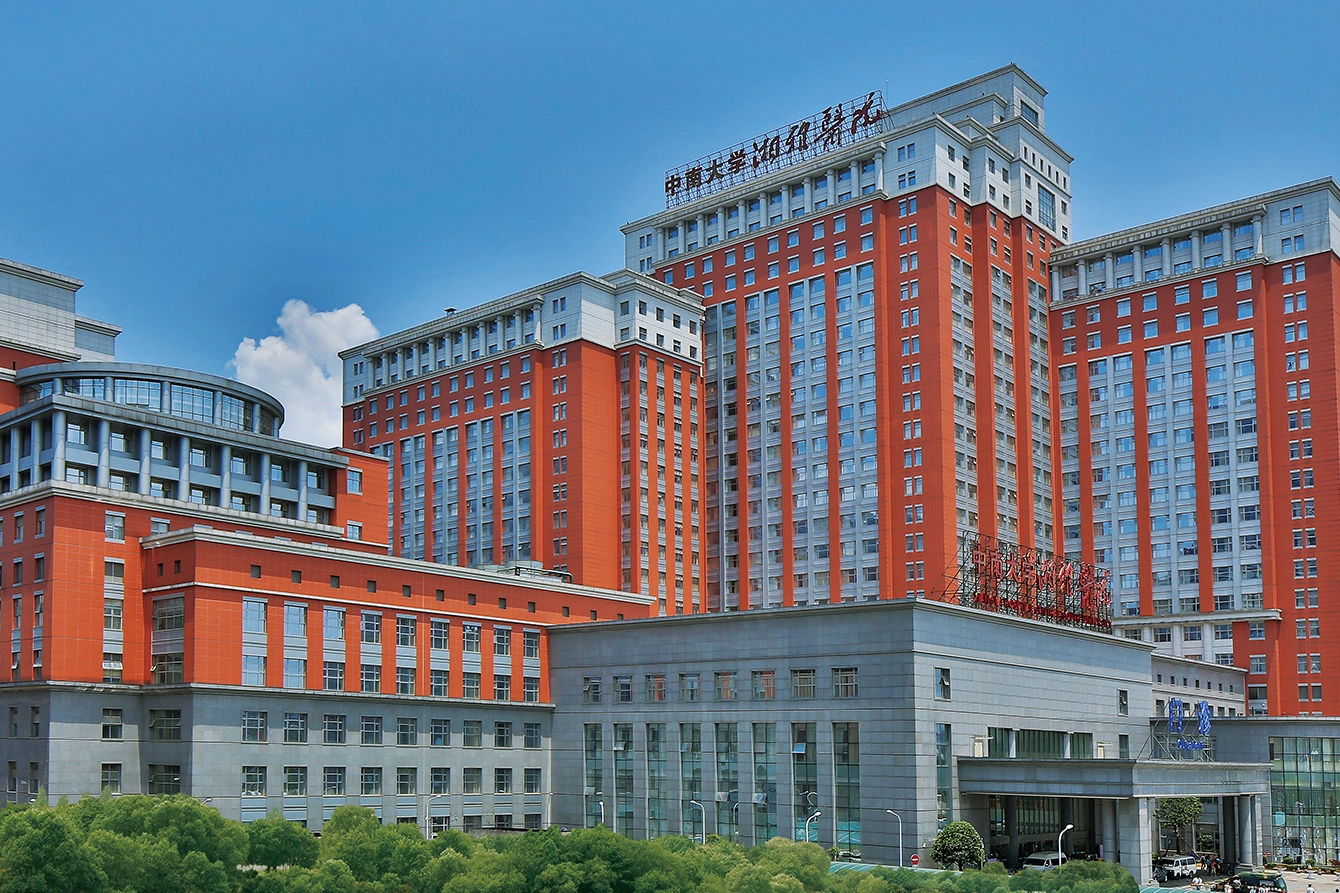
In this project, Liva Environmental Technology (Shanghai) Co., Ltd. (hereinafter referred to as "Shanghai Liva") successfully completed the vibration isolation and noise reduction retrofit of the pump room at Xiangya Hospital of Central South University in Changsha, Hunan Province, taking full responsibility for solution design, supply of specialized vibration isolation equipment, and on-site construction technical guidance. As a special public medical facility, the hospital serves core functions including clinical diagnosis and treatment, patient rehabilitation, and medical research, with stringent standards for indoor environmental quietness and precision that far exceed those of ordinary buildings, and an extremely low tolerance for vibration and noise. The pump room, as a critical electromechanical area within the hospital, generates vibration and noise during routine equipment operation, which is transmitted through walls, floors, and piping as structural‑borne sound and vibration, propagating to wards, consultation rooms, operating theaters, and other core areas. This severely interferes with postoperative patient recovery, disrupts the normal diagnostic and treatment work of medical staff, and may even affect the stable operation of precision medical equipment, failing to meet Xiangya Hospital's high standards for patient care and working environments. Therefore, a professional, high‑precision vibration isolation and noise reduction retrofit was urgently required.
Key Challenges of the Pump Room Retrofit
Stringent hospital standards requiring high isolation precision
Unlike commercial buildings or industrial plants, hospitals have extremely low tolerance for vibration and noise. Even minor equipment vibration and low‑frequency noise can interfere with postoperative patient recovery, outpatient diagnosis and treatment, and the operation of precision medical equipment in operating theaters. Conventional isolation pads and standard isolators on the market suffer from poor isolation effectiveness and insufficient stability, failing to meet the hospital's long‑term, high‑precision isolation and noise reduction requirements, and often leading to rebound vibration and recurring noise issues.
Complex piping and equipment layout, difficult operating condition adaptation*
High durability requirements for long‑term uninterrupted operation
The hospital pump room operates 24/7 with frequent equipment start‑stop cycles and sustained vibration loads. The machine room environment is subject to slight humidity and temperature fluctuations. Standard isolation devices are susceptible to rust, aging, deformation, and loss of elasticity, leading to a significant decline in isolation performance after short‑term use, requiring frequent replacement and maintenance. This affects the stable operation of hospital equipment and increases maintenance costs. Therefore, this retrofit imposes extremely high demands on corrosion resistance, fatigue resistance, and long‑term stability of the isolation devices.
Based on the specific operating conditions, vibration types, and high‑precision isolation requirements of the hospital pump room, Shanghai Liva abandoned a single‑type isolation approach and adopted a zoned adaptation strategy:
- For connection points such as pump piping and pipe supports, spring isolators were selected to address pipe‑operating vibration and structural‑borne transmission, leveraging their long‑lasting durability and stable buffering characteristics to suit continuous pipe operation.
- For the heavy equipment bases and floor‑mounted foundations of the main pump units, pneumatic isolators were employed, utilizing their ultra‑low natural frequency and superior isolation efficiency to precisely handle the mixed high‑ and low‑frequency vibrations of the equipment itself, comprehensively covering the complex isolation scenarios of the pump room and meeting the hospital's stringent precision isolation standards.
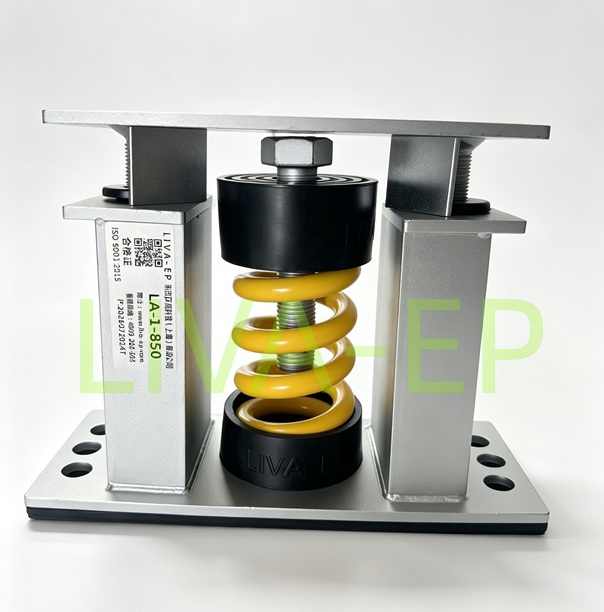
Spring Isolators
Designed for stable buffering, long‑term rust prevention, and suitability for pipe support isolation.
A unique retaining bolt design maintains a standard 12‑mm clearance from the outer frame, effectively blocking pipe vibration transmission to walls and floor‑mounted supports, preventing structural resonance propagation. The base is equipped with a 6‑mm thick synthetic rubber pad, providing both sound absorption and anti‑slip functions, effectively attenuating low‑frequency pipe noise and preventing support displacement from prolonged vibration. A dedicated pressure‑adjusting structure precisely fixes the installation height, adapting to the confined and pipe‑dense installation spaces of the pump room, with simple construction and strong adaptability.
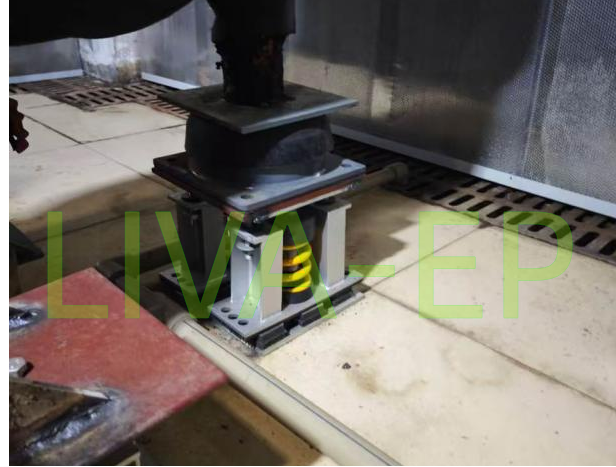
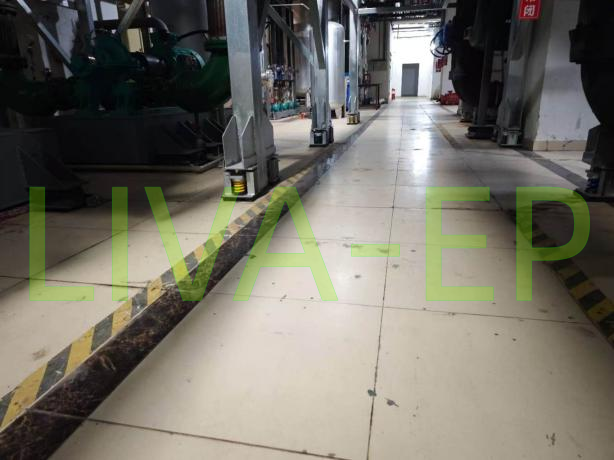
Pipe fixing supports.
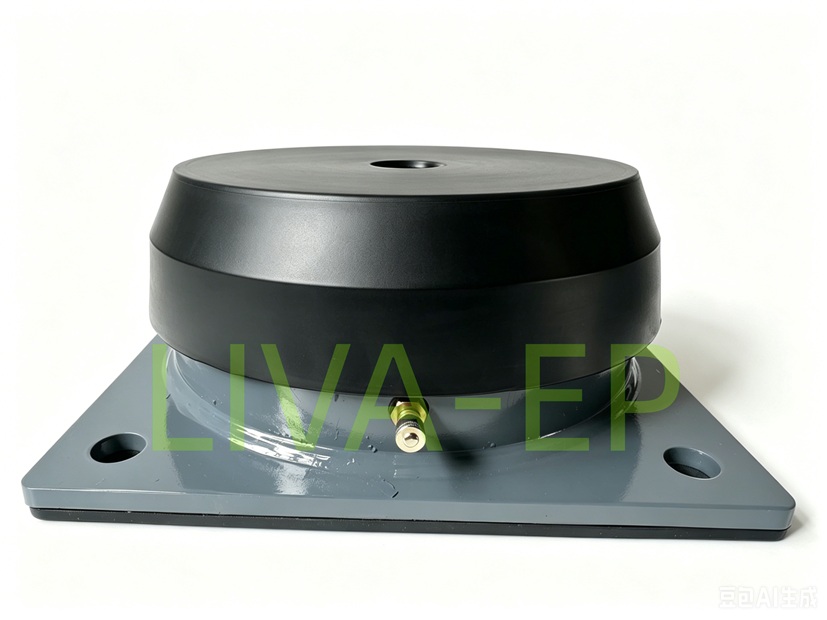
Pneumatic Isolators
Designed for ultra‑low frequency, ultra‑high isolation efficiency, and precision damping for main equipment.
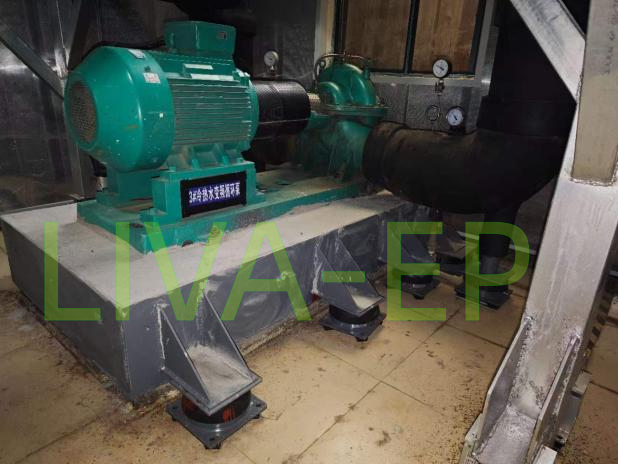
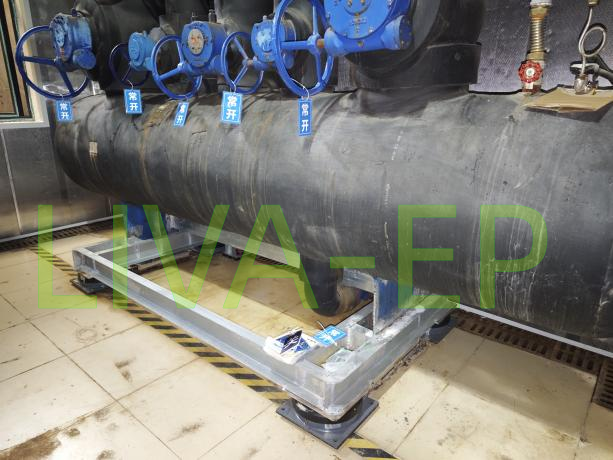
Pump main unit
This project undertaken by Shanghai Liva has precisely addressed the core isolation requirements of medical scenarios – high precision, high stability, and low noise – for the specialized operating conditions of the hospital pump room. The overall retrofit results have far exceeded the required standards, while fully validating the differentiated performance and adaptability advantages of the two types of isolation products. These two differentiated isolator products are not limited to hospital pump room applications; they are also widely adaptable to vibration and noise reduction retrofits for electromechanical equipment across multiple industries, offering strong versatility and practicality.
Looking ahead, Shanghai Liva will continue to deepen its presence in the specialized vibration and noise reduction sector, focusing on the R&D and implementation of customized isolation solutions for high‑precision and special‑condition scenarios. At the same time, the company will maintain its operation‑centric, results‑oriented approach, continuously refining its full‑chain service capabilities – from solution design, product selection, and construction implementation to after‑sales maintenance. Leveraging professional product advantages and technical expertise, Liva aims to set industry benchmarks for high‑quality isolation retrofits, providing clients across various sectors with more professional, efficient, and hassle‑free one‑stop vibration and noise reduction solutions.


